

Featured Provider
It's about improving a horse's comfort, quality of life, and giving owners more time with the animals they love.
Hi Elise, thanks for taking the time to chat! Please tell us what it is that you do.
I specialise in barefoot hoof care, with one simple goal at the centre of everything I do — helping horses achieve long-term soundness through healthy, functional feet.
For me, hoof care is about much more than trimming. Every horse is an individual, so I assess the whole picture, including their conformation, movement, hoof health, environment and workload, before deciding what that horse needs. There isn't a single trimming style or method that suits every horse, and I think that's one of the biggest misconceptions in the industry. Horses don't fit into a one-size-fits-all box when it comes to hoof care.
My approach is to use sound hoof care principles and biomechanics to support each horse as an individual. Just as importantly, I want owners to understand what I'm seeing and why I'm making certain decisions, because informed owners are a huge part of achieving lasting results.

It's about improving a horse's comfort, quality of life, and giving owners more time with the animals they love.
What area of New Zealand do you work in and how can people contact you to find out more or to book a treatment for their horse?
I'm based in Northwest Auckland and provide barefoot hoof care throughout the wider Auckland region.
The easiest way to get in touch is through my Facebook page, Barefoot Hoofcare Auckland, where owners can learn more about my work and send me a message. Alternatively, you can email me at barefoot.hoofcare.auckland@gmail.com to discuss your horse or arrange an appointment.
Whether you're looking for ongoing hoof care or simply have questions about your horse's feet, I'm always happy to help.
What inspired you to pursue Barefoot Hoofcare over other options?
My inspiration came from my own horse.I have a big Percheron gelding who was incredibly difficult for hoof care. He would snatch his legs away and made trimming a real challenge. As a young horse owner, I found myself struggling to find someone who was willing or able to work through those challenges with him. If his trim couldn't be completed within a standard appointment, it often meant we were back to square one.
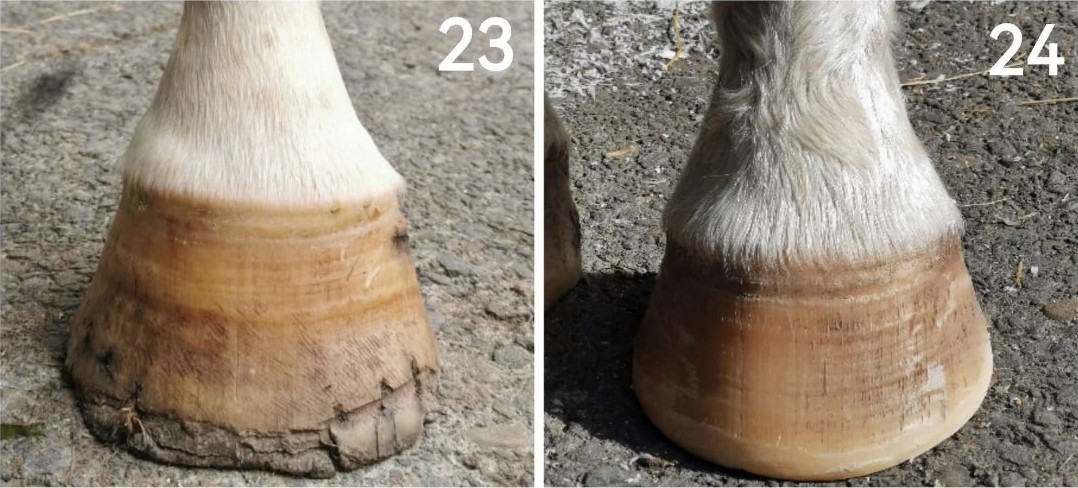
Over time, his hooves deteriorated. They became cracked, flared and looked more like dinner plates than healthy horse's feet. I knew something had to change, so I decided to learn to trim him myself.
I immersed myself in learning. I read everything I could get my hands on, watched countless videos and, most importantly, learned from my own horse. One of the biggest lessons was seeing the connection between his comfort and his behaviour. As his hooves became healthier and more balanced, he became more willing to stand quietly. His trust grew because he was more comfortable, and that completely changed the way I viewed hoof care.
Looking back now, that big Percheron taught me far more than I ever taught him. He was the reason Barefoot Hoofcare Auckland began, and he continues to influence the way I approach every horse I work with today.
What style of trim do you practice? Is this a technique you have trained for or have you developed your technique over time?
My trimming style is based on functional hoof care rather than following one rigid trimming method or philosophy. Every horse is an individual, so I don't believe in applying the same trim to every horse. Instead, I assess their conformation, movement, hoof health, wear patterns, environment and workload to determine what will best support that horse's long-term soundness.
I went on to study with the Institute of Barefoot Equine Management (IBEM), whose in-depth curriculum aligned closely with the way I had naturally come to approach hoof care. Like any profession, learning never stops. I continue to study new research, challenge my own thinking and refine my skills because every horse teaches you something new.
What are your favourite tools or products you can't go without?
My favourite rasp is the Heller eXceL. I've tried plenty, but I always come back to it because it's reliable, stays sharp longer, and consistently gives me the best result. I also wouldn't be without my Paul Mitchell Diamond Sharpener — a sharp hoof knife is essential, and no matter how good the knife is, it's useless if it's blunt.
When it comes to hoof care products, apple cider vinegar is another one I regularly use and recommend.
I use it diluted 50/50 with water after a trim and recommend applying it to the whole underside of the hoof once or twice a week, particularly through winter, to help control the anaerobic bacteria associated with thrush and white line disease. It's cost-effective and works just as well as other equine thrush products.
What does a session look like from when you first approach the horse. What do you look for in that first impression?
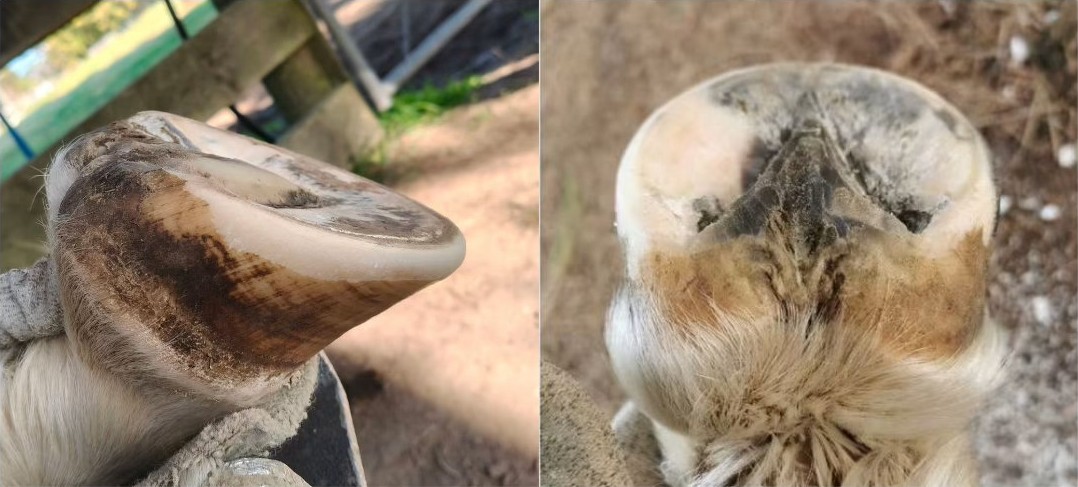
Every appointment starts before I even touch the horse. I watch how they're standing, whether they're loading each limb evenly, and how they're moving if possible. Once I pick up each foot, I assess hoof balance, growth patterns, wall thickness, sole depth, frog health, bars, heels and wear patterns. The trim itself is only one part of the appointment. I like owners to leave understanding what I found, why I trimmed the way I did, and what they can do between visits to help their horse continue improving.
What is your greatest success so far in your career?
For me, success isn't measured by one particular horse, it's seeing horses become more comfortable and watching owners gain confidence in understanding their horses' feet. There have been some incredibly rewarding horses along the way, but one that will always stay with me is an elderly miniature pony called Buddy.
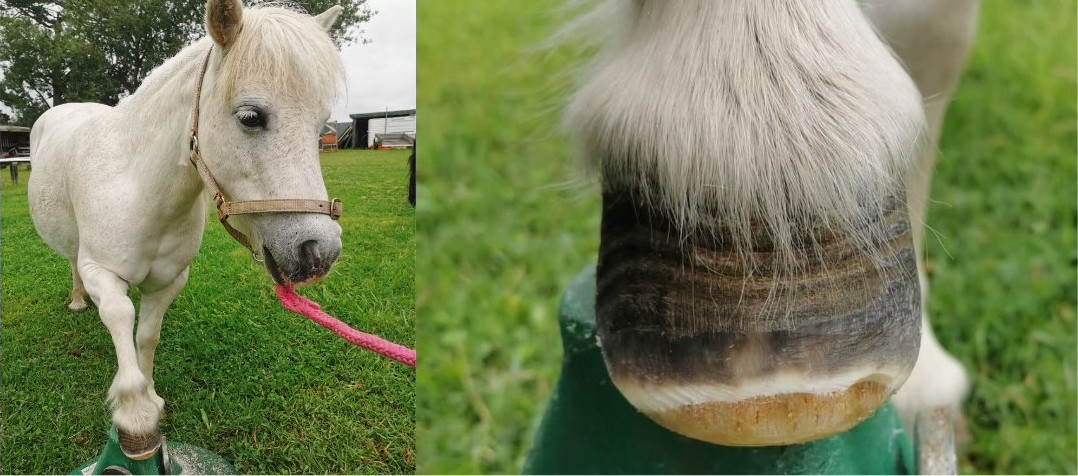
When I first met him, he could barely walk. He had chronic laminitis, recurring hoof abscesses, and feet that had been trimmed regularly but weren't supporting his comfort or long-term hoof health. His owner felt his time on earth was becoming very limited. After assessing his feet, we began a trim and rehabilitation plan with appointments every three weeks. Gradually, his comfort and mobility began to improve — and one afternoon, after a trim, he trotted away. It caught both his owner and me completely by surprise.
Four months later, he was a different little pony. He was brighter, more active, tearing around the paddock again, and the pain everyone had assumed was arthritis had improved dramatically. Most importantly, his owner was no longer facing the heartbreaking decision of whether it was time to say goodbye. Moments like that remind me why I do what I do.
Were there any surprises in the early days of your career that nobody warned you about?
One thing nobody really prepared me for was just how physically demanding the job is. When I first started, a straightforward maintenance trim on a well-behaved horse could take me close to two hours. As I've gained experience, refined my techniques and become more efficient, that same trim now takes around 40 minutes. Like any trade, repetition builds both confidence and efficiency, and every horse has helped me become a better practitioner.
Lastly, if there was one thing you wished all horse owners knew, what would it be?
Your horse's hooves are a reflection of their lifestyle, not just their last trim.A good trim is important, but it's only one piece of the puzzle. Nutrition, movement, environment and day-to-day management all play a huge role in hoof health. Healthy, functional hooves aren't created in a single appointment — they're built one good decision at a time, and those decisions start long before your hoof care practitioner arrives.